Showing posts with label fitness. Show all posts

Wednesday, July 18, 2018

Vlog: Exercising With Chronic Health Issues


Hi there!  I got up early to exercise this morning.  I got a great workout exercising along to Leslie Sansone's Walk Away the Pounds 3-Mile DVD.  Yay!  When the alarm went off, I thought, oh no, but I got up, got going and was glad I did.  Her DVD's are adaptable, fun, and offer up a really good workout.  And, I'm being paid to say that!  I've been using her videos for years. 

Do you have chronic health issues?  If so, do you exercise?  Whether you can walk or not, in most cases there are exercises you can do.  Don't listen to the naysayers that discourage you because they think you're unable to exercise or that you'll just make a mistake and get hurt.  Please, you're not a two year old.  You know your body and that it's important to take care of it.   Listen to it and exercise!  But, please, the first thing you need to do is check with your doctor to see what exercises you can and cannot do relative to your chronic health issues.  Then pick exercises that are fun for you to do and take it slow.  You want to challenge yourself, yes, but you don't want to hurt yourself.  You may even want to talk with a personal trainer, exercise scientist, fitness coach, or physical therapist to get tips on where to start, what exercises to do, and so on.  You can also ask me questions if you like since I was a fitness coach for eight years.  I still know a thing or two about fitness.  And if I don't know the answer, I can refer you to someone who may be able to help you.  

Exercise doesn't just help you lose weight, it can reduce the risk of certain diseases, boost your mood, improve your sleep, and much more.  So, get out there, find out what you can and cannot do, and have fun--for life!


Wednesday, August 9, 2017

Vlog: Fitness and Chronic Health Issues


Hi!  I hope you're having a great Wednesday.  Today's vlog focuses on fitness and chronic health issues.  I discuss how to get started, the importance of talking with your doctor or medical team before starting a fitness program, and how to advance your fitness program to get better results.  I hope you find this video helpful.  Exercise is so important to our well-being.  Whether you use a chair, walking aids, or you walk without aid, there are exercises you can do to get and keep fit.  I'm a former certified personal trainer.  I gave up my certification recently, but I still know a thing or two about fitness.  So if you have any questions, please feel free to ask.  If I can't help you, I can refer you to other professionals who might be able to answer your questions for thoroughly.  Good luck with your fitness program and have fun!

Monday, July 27, 2015

Choosing A Personal Trainer

A personal trainer can help you toward your fitness goals.  She provides accountability, program design specific to your needs, motivation, and professional advice regarding exercise and basic fitness nutrition. But how do you choose the trainer who is right for you?  Here are some tips.

1.   Personality:  Would you rather work with a trainer who is quiet and reserved or outgoing and perky.  Make sure the personal trainer you choose fits your personality preference.  

2.  Location:  Pick a personal trainer who works at a gym or has a private studio close to your home or work.  Some trainers will come to your home for sessions, or work with you via the Internet as well.  If your company has a fitness center, personal trainers may be available on-site.  Your personal trainer needs to be conveniently located to help keep you motivated to show up on a regular basis.

3.  Gender:  Do you prefer working with a man or a woman?  Does it matter?  Take that into consideration when making your choice.

4.  Professionalism:  Choose a personal trainer who is profession.  Make sure she dresses neatly, shows courtesy toward you and others, let's you know at least 24 hours in advance if she has to cancel or reschedule, and shows up on time and prepared for each session.

5.  Certification:  Make sure your personal trainer is certified by an organization that is accredited by the National Commission for Certifying Agencies (NCCA).  Examples are National Academy of Sports Medicine (NASM), American Council on Exercise (ACE), National Strength and Conditioning Association (NSCA), and American College of Sports Medicine (ACSM).

6.  Cost:  Look at your budget and see how much you can reasonably afford to pay a personal trainer, then research several in your area.  Personal trainers who work at box gyms or community centers are generally less expensive than those who have their own studios.   Be sure to take into consideration what is included in the fees of each trainer.

7.  Specialty:  Do you have a specific goal or issue to consider when picking a personal trainer?  If, for example, you have a specific health issue such as diabetes, you may want to work with someone with experience training clients with health issues.  Or if you're training for a marathon, you may want to work with a trainer with experience in that area.

It's a good idea to work with several trainers before choosing the one you would like to work with on a regular basis.  You have a right to do so.  Many gyms provide a free session with a trainer with membership.  Let each trainer you work with know you're considering other trainers before signing on with one in particular.   Personal trainers at gyms are available to assist members in general, not just paid personal training clients.  And, remember, you can always work out on your own, at home, too.  The Internet has some great fitness resources.  One of my favorites is the American Council on Exercise's website.  They have tons of information, including exercises, workouts, fitness facts, and recipes.  
I hope these tips help.  

Monday, July 20, 2015

Goal Setting: Get S.M.A.R.T

To make desired changes in your life, you need to set some goals.  Not just any goals, but S.M.A.R.T goals.  S.M.A.R.T goals can be used to tackle anything you want to change.  Here, I'll give examples of how to set weight loss as well as independence goals.

Specific:  Goals need to be clear.  Pare your goal down.  What exactly do you want?  

Weight Loss--"I want to get fit," is not specific.  There are many ways to get fit.  You'll want to choose something along the lines of, "I want to lose weight," instead.  

Independence--  Compare "I want to be independent," with the more targeted, "I want to find an apartment."  Wanting to be independent could mean many things, while switching to "I want to find an apartment," focuses your attention on the specific.  Key on the specific goal you want to achieve. 

Measurable:  Goals also need to be measurable.  How will you know you've reached your goal?  This involves picking a number.  

Weight Loss--How much weight do you want to lose?  Keep a weight loss journal to log your weight regularly.  Weigh yourself once a day or once a week, whatever you prefer, as long as it's done on a regular basis.  Keep track of your progress. 

Independence--How many apartments will you look at per week?  Two?  Five?  Ten?  Keep track of your progress in your apartment hunting journal.  You can also note in your journal the plusses and minuses of the cost, location, and amentiies for each apartment you look at.  
Attainable: Set a goal that you can reasonably shoot for.  Go for what you want, but make sure it's something you actually can do.

Weight Loss--Say you want to lose 100 pounds.  That's tough and will take a long time. Instead of concentrating on the whole amount, break it down into more manageable 20-pound increments. "I will lose 20 pounds," is attainable.   

Independence-- "Find an apartment that is wheel-chair accessible," is a doable goal, although it might take time.  Be patient.  Also, do some research to find out how much money you'll need for rent, utilities, and any other services you require.  Resources such as grants and special programs may be available to help with those expenses.  If so, check them out and see if you qualify.

Realistic:  Set a goal that you really can commit to.  Choose a goal that is meaningful to you. 

Weight Loss--Losing weight to reduce your A1C level is an excellent and realistic goal, while losing weight because your spouse thinks you should, is not.   You need to want it, crave it, eat it, sleep it, breathe it, own it.  It can't be someone else's goal for you; it has to be your goal for yourself.  

Independence--Similarly, searching for your own apartment because you are ready to strike out on your own and you crave independence is realistic, while doing so because you don't want to be laughed at for living with your parents as an adult, is not.  You need to be ready to make the move.  Don't rush it.  

Time:  Set a time by which you will achieve your goal.  This helps you stay accountable and moving forward toward your goal.  

Weight Loss--If you want to lose 20 pounds, a reasonable deadline would be 4 months since a healthy weight loss rate of 1 to 2 pounds per week is recommended.  It may not seem like much but, added up, it makes a huge difference over time.  Think 52 weeks a year--yep, in a year you could lose 52 to 104 pounds, if needed, at that rate!  That is amazing!  And, you're more apt to keep it off too.  So, I urge you to be patient.  You will reap tremendous rewards opting for slow weight loss.

Independence--When do you want to be settled into your new apartment?  Before Christmas?  By summer?  Six months from now?  A year from now?  Setting a date by which you will be living on your own keeps the goal alive, helps you stay on task, and brings a sense of urgency you wouldn't have otherwise.  

Okay now, how S.M.A.R.T. are your goals?  Have you used this strategy to set goals for yourself?  How did it go?  Let me know.  Comment below or send me an email at amy@acnlifecoach.com.  I'd love to hear from you.  Take care.


Thursday, July 16, 2015

Getting Unstuck

Something's different.  Something doesn't feel quite right.  You may have noticed it creeping in bit by bit, or it may have hit you all of a sudden.  It could center on one segment of your life, like a "tired" marriage.  Or it could include a few--your boring job, distant friends, and spiritual crisis.  You may even yearn for a total life transformation; a clean slate.  You feel this incredible need to change, but you don't quite know how to go about it.  You're not even sure what you want.  You're stuck.  So, how can you get unstuck?  Let's take a look at some questions you can ask in order to pull yourself out of the muck and live a more satisfying life.

Why do you feel the way you do?

Find a quiet place to study your feelings.  Where did they come from?  When did you first notice them?  Were they sparked by a person's comment, a song, something you read? Getting to the source of your feelings can help you start to figure out what you need to do to ease your mind.  For example, you find yourself increasingly agitated and unable to concentrate and look back to when it started.  You may link it to an article you read on the Internet about a study reporting that a medication you are on has been found to cause cancer.  That's enough to make you agitated for sure.

What is your goal?

Choose deeply personal goals and think about why they mean so much to you.  Say you want to lose weight.  Decide why you want to.  Is it because you want to control your diabetes, or do you want to be able to have the energy to play with your grandchildren?  Those are solid reasons to lose weight.  On the other hand, setting such a goal because your spouse thinks you should isn't going to provide as much incentive to stick to the healthy eating and exercise plan needed to reach your goal.  Healthy weight loss doesn't happen overnight.  It takes time, commitment, and patience.  So, if your goal is to lose weight, dig down deep to find that solid reason why you want it to happen.


How will you feel when you achieve your goal?

Imagine how it will feel to reach your goal.  Again, let's use the weight loss example.  Imagine how you will feel when you hit your weight loss goal.  Whether you want to lose 10 or 100 pounds, imagine how you'll look and feel once the weight comes off.  Imagine how you will feel when your clothes fit loosely and you no longer get out of breath walking up and down stairs.  How will your life be different?  Looking ahead to when you've accomplished your goals can help you stay motivated to actually make it happen.

Who can help you accomplish your goal?

Sometimes you can get stuck in life because you don't feel you have anyone to help you out of your rut.  If, for example, you want to change careers but need additional education to do so.  You may be paralyzed by the fear of striking out into new territory, or you may not think it's financially possible to pay for the necessary degree.  If making this change is important to you, you need to take action.  Find out from colleges and universities in your area and online if you qualify for financial aid.  Also, talk to your family to see if anyone would be willing to help you out with the costs you'll incur, or even provide babysitting for your kids while you attend classes so you don't have to pay for expensive daycare.  If you do borrow money from friends or family, however, make sure you discuss when the money will be repaid to avoid any misunderstandings.  You can also look into getting a low interest loan.  There is a solution for whatever is making you feel stuck.  Reach out to those around you and let them help you find that solution.

What steps can you take to achieve your goal?

It can be pretty daunting to look at the big picture.  Instead, break things down into smaller steps so they seem more managable.  For example, if you would love to start your own business but feel overwhelmed by all that entails, break things down.  Make a schedule of what needs to be done on each day.  You'll want to start by checking into how much money you'll need, permit requirements, office space, and business loans.  You'll also have to get office equipment and a website, possibly hire staff, and advertise your business.  Take your time, learn the ropes from a mentor, get advice from other professionals you respect, be smart about managing your finances, and you'll reach your goal as a successful business owner.

What or who is standing in the way of accomplishing your goals?  How will you knock down those road blocks?

If you have difficulty standing for long periods of time or have a lot of doctor's appointments, you may think you'll have a hard time finding a suitable job, so why bother. What should you do?  Discuss the issue with your caseworker if you have one. When you go to interviews be straight forward and let the interviewer know that you need to be able to sit down for work, or at least take frequent breaks.  Also, be honest about the times you may have to miss work.  There's a possibility your supervisor can work with a temp service to cover for you in the event that you need to miss work for surgery or lengthy illness.  It won't hurt to inquire.  Another option is working from home.  There are plenty of opportunities for stay-at-home workers.  You may even be able to work remotely (from home) for local companies.  Check with your area job service or online job sites such as Monster.com, SimplyHired.com and CareerBuilder.com.  Make sure you research the validity and reputation of the various websites and employers before taking any jobs online. 

What tools do you currently have in order to accomplish your goals?

It is important, when you're stuck, to take note of the resources you have available to help you break out of your rut and meet your goals.  For example, if you are experiencing a spiritual crisis, you may want to talk with someone from your local house of worship, either a fellow member or the pastor or rabbi.  Or family and friends.  You may also search Amazon.com for a plethora of books and videos on the subject.  Also, consider listening to your heart.  Find a quiet place to sit and think about what you truly believe.  Are you religious?  Do you consider yourself more spiritual than religious?  Do you feel the need to worship with other members of your faith at a church or synagogue, or would you rather speak to your Higher Power amongst trees and rivers and wildlife?  Are you disillusioned by your current faith?  Are you curious about another faith?  Explore those avenues and see which one feels the most authentic to you.  

What tools do you need in order to reach your goals?

Let's go back to the example of starting a business.  You've got your financing, your office, your staff, your business cards, your website, your office equipment, your insurance.  What else do you need?  Do you have a reliable car to use for the commute to and from work?  If you have children, have you arranged for reliable daycare?  Have you bought suitable work attire?  Have you looked into networking events to get your name out there?  And don't forget to work on your confidence.  Be confident that you will succeed.  Take charge of this opportunity you've dreamed of for so long and know that you can make it in business, doing what you love to do.

What's your deadline?

What is your deadline for meeting your goals?  This is a very important question.  You need a deadline to remain accountable and stay on track toward your goals.  Say it's January and you want to start college in August.  You're married with a family and will need a reliable vehicle to make the commute to school.  The cost of tuition and books will drain your savings account.  It's time to start putting away some cash toward that new car.  It doesn't have to be brand new, but it has to be a good one.  The same goes for anything you truly want to accomplish--you need to set a time by which you will hit your mark, lose that weight, pay off debt, learn to drive, make partner at the firm, get your first apartment, make a profit from your business.

Considerations


  • Do what makes your heart sing, both in your personal and professional life. 
  • Surround yourself with positive people who support your goals and celebrate little victories on the road to making those ultimate goals reality.
  • Your journey toward your goals could be a smooth one or a rocky one, or a mixture of both.  Be patient and persistant.  Don't let the rough times get you down.
  • Your goals may change along the way.  That's okay.  Go with your gut and do what feels right to you at the time.
  • Are you stuck or just in transition?  Ask this question before making any major life changes.

When it comes right down to it, getting unstuck is up to you.  Yes, you can seek help but the bulk of the work is yours.  You must commit to making your life as fulfilling, rewarding, and exciting as it can be.  Nobody else can do that for you.

Are you stuck?  I'd like to hear from you.  Email me at amy@acnlifecoach.com or post a comment below.  


Tuesday, June 23, 2015

What Hobby Brings You Joy?

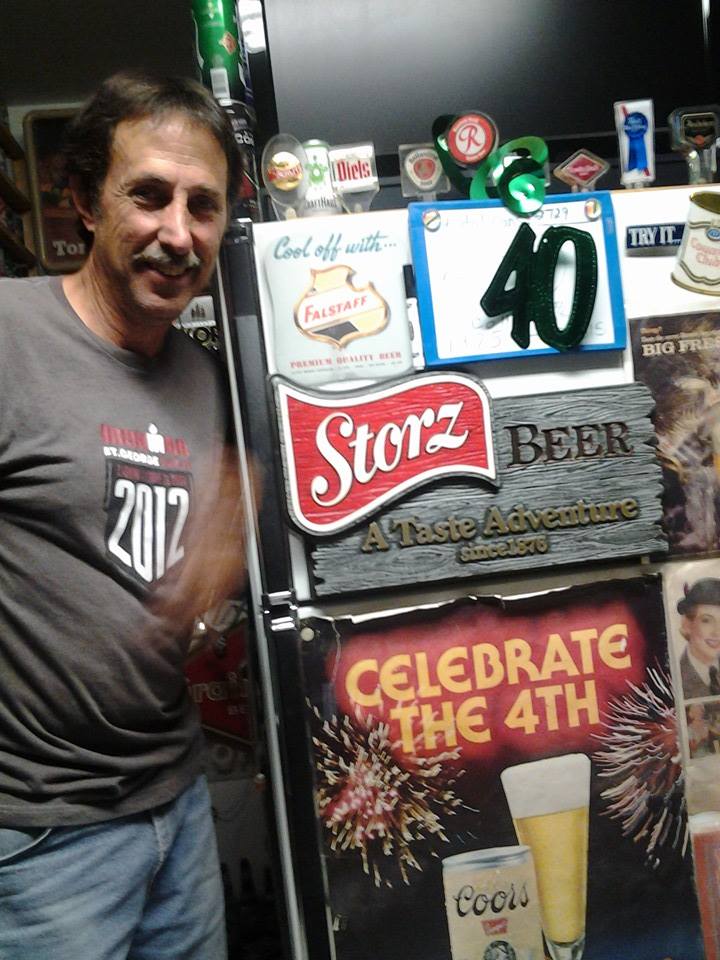
Do you have a hobby that brings you utter joy?  This marks the fortieth year that Jim, my hubby, has been collecting breweriana.  He started out collecting both soda and beer cans with his brother, but when the garage started filling up, their dad said they had to pick one or the other, so they chose to continue on with the beer cans.  

Eventually Jim bought his brother's share and then added other items, including signs, posters, bottles, trays, and coasters, to the mix.  The collection has grown to nearly 3000 items.

What makes collecting breweriana so enjoyable?

"It's neat to accumulate all the brands from all over the world, all the different designs,"  Jim said.  "It's like a treasure hunt.  I've found cans anywhere from yard sales to a hollow tree."  

Jim's favorite brand of beer is Falstaff, which hasn't been made since 2005.  

"It was our local beer in Nebraska; the brand my dad drank."

Some brands that he has in the collection aren't made anymore.  

"It's nice to have an example of a brand from the past that no longer exists," he said.

The collection is in one room of the house.  Unless he puts up shelves all over the rest of the house (um, no), he'll run out of room eventually.  Now, he's limiting new additions to personally emptied cans only.  It should take him a little while, then, to fill the remaining 200 slots left.

Having a hobby, whether it's collecting, or something else such as knitting, furniture making, quilting, or genealogy, can bring considerable joy.  It can also reduce stress, improve memory, boost problem solving skills, increase self esteem, and improve sleep.  

Some hobbies involve more expense than others.  Pick the ones you enjoy and can afford to keep up with so you don't run into financial road blocks down the line.

Do you have a favorite hobby?  If not, start thinking about what you would like to try.  Do some investigating; scope out several hobbies to see which one(s) spark the most interest.   Then dive it and have fun!

My favorite interests are reading, writing, exploring thrift stores and secondhand book shops, volunteering, and exercise.  What are your favorite interests and hobbies?  What makes your heart sing?  I'd love to hear about it.


Thursday, June 18, 2015

What to Wear to Work Out

Me in 2008 when I was in the best
 shape of my life, hitting the gym
2 hours a day, 4 days a week.
When you walk through the doors of the gym, you can expect to see patrons dressed in a variety of workout clothing.  Some wear shimmering spandex, others come in wearing an old tee shirt and baggy sweatpants, and still others don muscle shirts and basketball shorts.  All of these are appropriate.  Don't think you have to go out and buy fancy new gear.  It might be a motivator to buy one or two new outfits, but you don't have to go hog wild.  There's no special clothing required to work out.  Just remember to wear something that's comfortable, cool, breathes well, absorbs moisture, and allows you to move freely.  

Wear comfortable shoes, as well, that provide overall support for running, walking, jumping, or whatever activity you will be participating in.  Whatever type of shoe you're comfortable in, go for it, but skip the flip flops, dress shoes, and work boots.  Go for rubber sole that aren't too fat to help avoid tripping up.  If you don't already have appropriate shoes, look for them at discount, department or sporting goods stores.

My favorite clothes to workout in are tee shirts and stretchy shorts or sweats.  They're simple, affordable and easy to care for.  They do retain odor, though, I've noticed.  I have to replace them quite often.  But I just don't personally like the ones that are more absorbent and breathable.  It's my personal choice.  You'll need to make your own choices as well.  Go with with feels good and motivates you to hit the gym for fun, effective workout.  

What do you prefer to exercise in?  

Wednesday, June 17, 2015

The Benefits of Hiking

Huntington Beach Central Park, 2010


Walking is my favorite form of exercise.  Jim and I walk the trails that meander through the city as often as we can.  We also love to head for the mountains to hit the trails there for some hiking.  It feels awesome to get outside, breathe in some fresh air, and get the heart pumping with some serious moving about!  It wakes me up, gives me more energy, improves my mood, clears my head, and just makes me feel good all the way around. But those are only a few of the very real benefits of hiking.  Read on for more.
Regular aerobic exercise provides many health benefits.  Hiking is a great form of aerobic exercise.  Some of the benefits include:
  • Boosted cardio-respiratory fitness (keeps your heart, lungs, and blood vessels healthy)*
  • Increased muscle
  • Ability to give pretty much your whole body a workout  
  • Reduced risk of stroke and heart disease (can help by lowering blood pressure)
  • Reduced risk of high blood pressure (it can lower blood pressure by 4-10 points)
  • Reduced risk of  type 2 diabetes* (for those with type 1 diabetes, walking reduces the amount of insulin needed by the body; for those with type 2 diabetes, exercise along with a healthy diet and weight loss can help reverse it.)
  • Reduced risk of high cholesterol and triglycerides
  • Reduced risk of cancers such as colon and breast
  • Improved bone density/hindered calcium loss*
  • Improved sleep*
  • Relief from depression**
  • Boosted imagination
  • Increased brain health (boosts mood, releases feel-good endorphins)
  • Reduced anxiety
  • Reduced risk of dying prematurely
  • Weight control* (You burn an average of 100 calories per mile walked at a regular, comfortable pace.  Boost your pace, boost your calorie burn.)
  • Increased sense of well-being
  • Increased sense of accomplishment should you progress to tougher trails or hike for longer distances
You don't have to hike a lot to reap most of these benefits.  Just 30 minutes most days will do it (150 minutes of moderate activity per week is recommended, so moderate hiking.  You can talk but you can't sing.).  You can break it up into 10 minute bouts of exercise, too, if you don't want to or don't have time to complete your exercise routine in all one go.  Of course, challenging yourself as you become stronger will help provide even more benefits to your health.  Vigorous exercise, such as hiking uphill or with a backpack on your back, provides that challenge.  Shoot for 75 minutes per week of vigorous exercise--you can only speak a few words at a time. 
Aerobic exercise is great, but you also should get 2 to 3 days of resistance training in per week.  Body weight, free weights, weight machines--choose the exercises that are the most fun and manageable for you.  Like aerobic exercise, gradually increase weight and/or repetitions as you get stronger.  You can also vary rest time between sets and speed to change up your workouts. 
Precautions:
  • If you have led a sedentary lifestyle, if you are 35 years old or older, or if you have a chronic health issue, consult your doctor before starting a new exercise program. 
  • Start out slowly if you are new to hiking or any other type of physical exercise.
  • Always listen to your body.  If you are having a tough time breathing, experiencing sharp pains, or feeling dizzy, stop exercising immediately and seek medical care.
  • Go your own speed.  Yes, it's good to be challenged, but don't go overboard or be a show off. 
  • Hike with others who are at about the same (or slightly higher) fitness level as you are.
  • Stay hydrated.  Drink plenty of water.  Check out the Mayo Clinic's recommendations in this article--> "Factors that Influence Water Needs." Also, bring some snacks such as nuts, dried berries, or trail mix with you.
  • Wear appropriate clothing and footwear.  I have seen people hiking canyons in flip flops.  Um, not smart.  Invest in a quality pair of hiking boots.  Your feet and ankles will thank you.  Wear layers in winter, and loose, cool clothing during the warmer months.  Might be a good idea to wear bright colors too.
  • Bring a walking stick to help keep your balance on tougher terrain.
  • Bring bright rags or some other appropriate items to mark your trail to help avoid getting lost.
  • Hike with a buddy.  You never know what you'll encounter out there in the boonies.  It's nice to think of getting away from it all and hiking in solitude, but it's not very smart.  Find  a place closer to home where you can go for that alone time instead. 
  • Let others know where you're going and when you plan to return. 
  • Bring a cell phone with you, but be aware that it may not work depending on where you decide to hike.
You may want to invest in a pedometer to keep track of your walking and hiking progress.  It can be a lot of fun and provide motivation to see how many steps you take each day or during each hike.
Are you a hiker?  Or are you just thinking about getting into it?  What are some tips that have helped make your ventures out into nature more fun, safe, and fulfilling?

*Also seen in children who get regular aerobic exercise.  **May occur in children who get regular aerobic exercise.

Wednesday, June 10, 2015

Fun Fitness Blog Posts

Hi!  Happy Wednesday!  I hope your week is going great so far.  I haven't felt well this week so I've been dragging, but I've gotten some work done on my blog which I'm thrilled about.  I'm happy to be back on Blogger!  As I was transferring blog posts from my previous platform, I checked in on my old Blogger blog, Fun Fitness.  I haven't posted to it since last year.  Why, I don't know.  I just lost track of it, I guess.  I also was switching over to life coaching so didn't focus in on the fitness blog as much, although fitness is very much a part of my life coaching business.  So, I decided to share a link here to my Fun Fitness blog which contains nearly 50 posts on fitness, motivation, and nutrition.  I hope the information included proves helpful to you.  If you have any questions or comments about either of my blogs, please let me know.  I welcome your feedback.  Take care.

Friday, May 22, 2015

Choosing a Gym


This video is on how to choose a gym.  I hope it's helpful to you.  Let me know what's important to you when choosing where you work out.  I'd love to hear from you.
Comment below, or email me at amy@acnlifecoach.com.  Have a great weekend!


Thursday, April 23, 2015

What Is a Life Coach?

Hi!  Welcome to my blog.  I'll be writing about life and life coaching.  Some topics I plan to cover are motivation, weight loss, fitness, special needs, goals, positive thinking, habits, balancing work-home life, getting unstuck,  community involvement, self-esteem, making your dreams come true one step at a time, breaking down road blocks that stand in the way of you realizing your goals, how to get the most out of your life coaching sessions, believing in yourself, and shaking up your life to make it the best it can be.  

First, though, what is a life coach?  

What is a life coach?

A life coach helps you change your life for the better.  A life coach is a guide, a motivator, and a listener, not a psychotherapist, counselor, or consultant.  A life coach doesn't have the answers, but she does ask the questions which will help guide you to your own answers to problems in your life that make you feel "stuck."  Let's say, for example, you are bored with your job but you don't see any way that you can leave it.  The life coach helps you figure out, through discussion and exercises, how to jazz up that current job and make it more satisfying. (Click here for more information.)

Benefits of working with a life coach.

You are in control.  You decide what to discuss during the sessions.  Your life coach is your partner, guiding you through the sessions and providing non-judgemental support throughout the coaching process.  A life coach can provide you with accountability to keep you moving toward your goals.  You'll discuss and work through your life issues in a safe, trusting atmosphere.  There is no blaming, no yellinng, no guilt trips.  The life coach is in your corner throughout your working partnership, cheering you on toward a happier, more fulfilling life.  (Click here for more benefits of life coaching.)

What kind of life coach am I?

I'm pretty casual.  I want you to feel at ease and able to talk about your issues, dreams, and goals with me.  I provide the guidance, exercises, and accountability mentioned above.  I make sure that you follow through on tasks meant to bring you closer to your dreams.  I provide regular email support, sending you links and articles to compliment the coaching sessions.  We'll laugh, maybe even cry a little.  We'll celebrate your victories along the road to reaching your ultimate goals.  If something isn't working, we'll change direction.  No pressure.  What we talk about is up to you.  You lead the way and I'll guide you along, toward the happier life you desire, by asking appropriate questions.  Your answers to these questions will bring you closer to solving the issues that are standing in the way of your living the best life that you can.  I will help you discover your own answers to life's questions, and uncover the real you, helping you to become the best You you can be.  Through discussion and exercises, I can can help you break down barriers that are keeping you from experiencing life to the fullest.  

I will absolutely keep all your information and my conversations with you confidential.  I have a variety of coaching packages to choose from--short-term, medium-term, long-term, email coaching, phone coaching, month-to-month, etc.  You decide which package you would like.  You decided when the coaching partnership ends.  If you have any questions, be sure to contact me.  If you are interested in the free session to see if life coaching is for you and if I'm the right coach for you, click here

Do you need a life coach?

You may find life coaching beneficial if you:
  • feel stuck in your current life situation 
  • want to jazz up your life in general
  • need accountability, motivation, guidance and/or support to get through a temporary setback
  • need support and guidance during a loss of loved one, job, or pet
  • think about starting a fitness program but don't know where to begin
  • fear getting hurt if you start working out
  • have a health issue and wonder if you should be working out
  • have mobility issues due to an injury or medical condition
  • would like someone to provide accountability, motivation, support, encouragement and guidance as you make fitness a part of you life
  • need accountability, motivation, guidance and/or support to get through a temporary medical setback
  • have issues with family and/or friends related to mobility and medical problems
Check out the blue individual coaching tabs on my home page to see which type of coaching might be a good fit for you.  And, again, if you have any questions, please feel free to contact me.  I'd love to hear from you.